
Book Cheap Flights from Japan – Compare and Fly Worldwide!

Trending Flight Destinations in Japan in 2026
Enjoy seamless flight booking, compare unbeatable offers, and discover the best deals on TICKETING.JP!




















Welcome to TICKETS!
TICKETING.JP scans hundreds of providers, delivering unmatched flight deals—book smarter and save bigger!
About TICKETSExplore Amazing Flight Deals from Airports Across Japan
Find and compare affordable flights from Tokyo, Osaka, and other major cities to exciting global destinations.

Tokyo Narita
Nov 2026
Nonstop
One Way
Kansai International (Osaka)
Nov 2026
From
¥5K
Tokyo Narita
Nov 2026
Nonstop
One Way
Takamatsu
Nov 2026
From
¥5K
Tokyo Narita
Nov 2026
Nonstop
One Way
Sapporo Chitose
Nov 2026
From
¥6KTokyo Narita
Nov 2026
Nonstop
One Way
Matsuyama
Nov 2026
From
¥6KTokyo Narita
Nov 2026
Nonstop
One Way
Hiroshima International
Nov 2026
From
¥7KTokyo Narita
Nov 2026
Nonstop
One Way
Asahikawa
Nov 2026
From
¥7KTokyo Narita
Nov 2026
Nonstop
One Way
Kochi
Nov 2026
From
¥7KTokyo Narita
Nov 2026
Nonstop
One Way
Kumamoto
Nov 2026
From
¥7KTokyo Narita
Nov 2026
Nonstop
One Way
Amami O Shima
Nov 2026
From
¥7KTokyo Narita
Nov 2026
Nonstop
One Way
Oita
Nov 2026
From
¥7KFly Globally from Japan – Best Deals to Asia, Europe & Beyond
Discover seamless travel experiences and unbeatable airfares to your favorite international destinations with TICKETING.JP!






Discover Low-Cost Flights to Top International Destinations
Fly to popular global locations at affordable prices—explore more with TICKETING.JP!


Find the best flight deals effortlessly with TICKETS! Compare ticket prices from top airlines and trusted providers to secure unbeatable fares on local and international flights. Your seamless booking experience starts here — fast, reliable, and tailored for travelers.
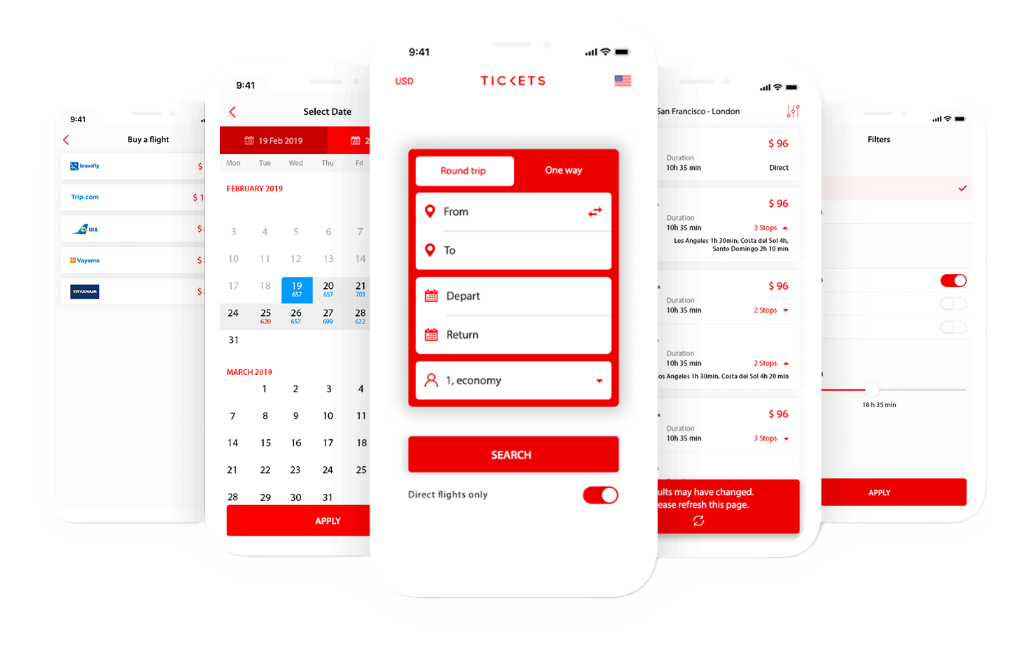
When Is the Cheapest Time to Book Flights? Booking Timing, the Cheapest Seasons, and Money-Saving Tips That Actually Work
How far in advance should you book to find cheap flights from Japan?
For short and medium-haul routes, the sweet spot for cheap flights is roughly one to two months before departure, with prices often bottoming out around six weeks out. Booking far earlier than that tends to cost more on nearby routes, so the popular belief that "the earlier you book, the cheaper it is" simply doesn't hold for these trips. Even from Tokyo, closer Asian routes like Seoul, Taipei, Hong Kong, and Bangkok don't require locking things in months ahead. Long-haul international flights such as Hawaii, Europe, and North America need a longer run-up, so giving yourself a few months is the safer play. For peak periods like the year-end and New Year holidays, Obon, and Golden Week, the rule is to book even earlier on popular routes. Flight fares move many times before departure, so hunting for the single "perfect" day is a war of attrition. Instead, set a route alert and let the TICKETS app send you a push notification the moment the fare moves. The one rule that reliably works: don't push your booking into the final two weeks before departure, when fares climb fastest.
When is the genuinely cheapest time to book a flight?
From Tokyo, buying on day one — the moment a route goes on sale — is among the most expensive ways to do it, not the cheapest. Fares start high in the ultra-early window right after release, drift toward their low around six weeks out, and then climb again as seats fill. In other words, flights cost you more both when you book far too early and when you leave it far too late — the savings cluster in the middle of the booking window. The exceptions are long-haul routes and peak periods, where seats really do sell out, so booking a few months ahead protects both the price and your seat. For a short trip in a quiet season there's no need to rush; for long-haul or busy dates, lock it in early. Rather than guessing which camp your route falls into, try TICKETING.JP's "Buy now or wait?" — it reads roughly 12 months of price history for that route and tells you whether to buy now or wait.
Which day of the week is genuinely cheapest to fly — and is it worth chasing?
As a basic rule, the lowest fares fall on a midweek flight, with Sunday the day to leave off your plans. Tuesdays and Wednesdays tend to be the lowest, while Sunday is often a pricey day to depart. The best day shifts by route and season, so rather than chasing one "magic day," it's smarter to treat "fly on a weekday, skip Sunday" as your guiding principle. The savings are slight on cheap short-haul routes, but on long-haul flights like those to Europe and North America, simply avoiding the weekend can shave a meaningful amount per person. One thing to keep clear: this is about the day you fly, not the day you buy. Flight fares update continuously rather than weekly as they once did, so the old tip to "buy on Tuesday" no longer applies. To see which times of year are cheap across the whole calendar, the month-by-month price view on the date picker points you to the cheaper months. For the day of the week, this weekday rule is enough.
Why can splitting a round trip into two tickets beat any airline's round-trip fare?
Splitting a round trip into two tickets can come out cheaper because combining two one-way tickets from different airlines can total less than the round-trip fare offered by a single carrier. Every time you run a round-trip search, TICKETING.JP also prices the outbound and return separately and combines the cheapest outbound flight with the cheapest return flight into a single "mash-up" result. This mash-up only appears when it actually beats the cheapest normal round trip, and the savings amount is shown clearly. If an ordinary round trip matches or beats it, that's what you'll see instead. The catch is that a mash-up means two separate tickets and two booking confirmations. Before you pay for either, you'll need to open both booking pages. TICKETING.JP flags the combination so you know exactly what you're booking, and this logic only holds when the price difference is real.
Should you buy two one-way tickets instead of a round trip?
Where a round trip out of Tokyo looks pricey, two separate one-way tickets can come out ahead — and TICKETING.JP's round-trip search tries it every single time, so you never have to hunt by hand. When the cheapest outbound and the cheapest return sit on different airlines, two one-way tickets combined can total fewer yen than any round-trip fare. TICKETING.JP bundles that into a single mash-up result, but only shows it when it beats the cheapest normal round trip, and it shows the savings. The trade-off is the extra effort. A mash-up is two separate tickets across two carriers, so you confirm each flight individually and have to collect and re-check your bags at the connecting point (they can't be checked all the way through). For a simple carry-on-only round trip this rarely matters, but if your connection is tight or you have checked bags, weigh the savings against the hassle.
If you can shift your dates, how much is that flexibility actually worth?
When it comes to cheap flights, flexibility with your dates is worth more than any other trick, because it lets you stack savings instead of relying on a single tactic. Shift from a weekend to a weekday, then move into a cheaper off-peak month, and those two combine to cut deeply into a peak-period weekend fare. The biggest lever of all is the timing itself. The calmer stretches that fall between peaks like Golden Week, Obon, and the year-end and New Year holidays usually come in considerably cheaper than the summer high season or the long holidays. Which months are cheapest varies by route, region, and hemisphere, but the principle of "avoid the obvious peaks" holds almost everywhere. By contrast, even picking the best day of the week saves little on cheap short-haul routes. That's exactly why it pays to view flights by the month rather than checking day by day. On TICKETING.JP's date picker, an indicative cheapest fare is shown for each month across several months, so the cheap months jump out at a glance.
Is it worth flying from a different airport to save on airfare?
Changing your departure airport in Japan can pay off, and the difference is sometimes substantial, because low-cost carriers gather where usage fees are lower and that saving feeds straight into the yen fare. The key, though, is the total door-to-door cost. A cheap fare from a hard-to-reach airport only truly wins once you add parking, the cost of getting there, and the extra travel time. In Tokyo, Narita and Haneda can differ in both their flights and their fares, and which one comes out ahead depends on your destination and how easy each is to reach on the day. TICKETING.JP detects the airport nearest to you, and you can also set your departure airport manually. There's no automatic radius search that bundles nearby airports into a single search, so to try a different airport, set it as your origin and compare. To quickly scan prices to multiple destinations across an area, the destination map is faster. The takeaway: compare flights on the total cost of the trip, not just the headline fare.
Is a cheap self-transfer flight worth the risk of a missed connection?
A self-transfer (virtual interline) fare out of Narita or Haneda is lower for one reason: you, not the airline, absorb the risk that the legs fail to line up. It stitches two separate tickets from airlines with no partnership into a single itinerary, with no agreement between them to protect your connection. The biggest risk is the connection itself. If your first flight is delayed and you miss the next one, that airline owes you nothing. You're treated as a no-show, and you may have to rebook the ticket yourself. You also collect and re-check your bags leg by leg, and any protection is judged ticket by ticket. So price a self-transfer flight not by its headline fare but by the cost of the downside. Leave plenty of connection time — a few hours for carry-on only, and longer if you have checked bags or an airport change. It's worth considering travel insurance that covers connection delays, too. TICKETING.JP surfaces these options with a warning, and the route map flags every airport change, so you can decide with full awareness.
Are flight price alerts worth setting up — or just noise?
The value of an alert isn't foresight; it's the speed of reacting the moment a Tokyo–Honolulu fare slips. Because fares move many times before departure, the TICKETS app's price alerts watch the route you choose and send a push notification the moment it actually drops. That turns your booking timing from guesswork into a rule: set the alert, then buy on a cheap season or a genuine drop. Price alerts are especially useful when your dates are flexible, when you're booking far ahead, or when you're tracking a volatile long-haul route. The blind spot is that a fleeting deal can vanish before the alert even fires. If you want the shape of the price trend rather than a single notification, "Buy now or wait?" scores roughly a year of price history and tells you to buy, wait, or stay neutral. And for the record, the TICKETS app's price alerts are free.
Will this flight's fare drop — or should you buy right now?
Lay today's Tokyo–Osaka or Narita–Honolulu fare over that route's own 12 months of history and its next move stops being a mystery — and that is precisely the overlay TICKETING.JP's "Buy now or wait?" draws for you. Enter a route and it returns one of three calls — buy, wait, or neutral — each with a confidence score, the cheapest and most expensive months, and a trend that's rising, falling, or flat. The data-backed principle goes like this: if you're inside the cheap window (about six weeks out for short-haul, a few months for long-haul) and the fare is at or below that route's usual level, buy now. If it's early in the cycle and high for the season, waiting can pay off. The strongest signal is also the simplest: don't push your booking into the final two weeks before departure, when fares climb fastest. If you're still unsure, set a price alert and let the price movement make the call.
If it's free and there's no markup, how does TICKETING.JP make money?
TICKETING.JP's revenue arrives from one place only — a referral commission the seller pays after a booking actually goes through, never from your wallet. The fares you see are the airline's or online travel agency's own prices, passed through with no markup added. When you tap the booking button on a flight from Haneda, we hand you over to that seller's own site, where you complete the payment in yen, and the seller pays a commission for the referral. Because that commission has no effect on the price you see and pay, everything stays free: comparing flights, the month-by-month price view, the destination map, and "Buy now or wait?" alike. The TICKETS app's route price alerts are free too. We only earn when a booking completes — there are no membership fees, no booking fees, and nothing ever added on top of the fare.
What time of year are flights cheapest?
The cheapest time of year to fly is during the off-peak stretches that fall between the long holidays and the summer peak — and this single move does more than any day-of-the-week trick. In many markets the lows arrive in January and February after the New Year holidays, and in September and October once the summer crowds settle. The expensive periods, by contrast, are the summer high season (broadly June to August) and the year-end and New Year holidays. In Japan, Golden Week and Obon are clear peaks on top of those. Cheap seasons swap around by route, region, and hemisphere — a southern-hemisphere summer or a local festival can flip them — but the principle of "avoid the obvious holidays and summer peaks" holds almost everywhere. On TICKETING.JP, it's easy to find when flights are cheap thanks to price insights that show the cheapest and most expensive months across 12 months for each destination. From there, just search the results page for fares with seats actually available.